

Wir entwickeln, erproben, vernetzen und betreiben Intelligente Technische Systeme.
Mit Digitalen Zwillingen – in der Forschung und gemeinsam mit Partnern aus Industrie und Anwendung.
Wir interagieren mit Systemen über ihr digitales Abbild.
Unsere Digitalen Zwillinge begleiten System und Mensch durch den gesamten Lebenszyklus.
Der Digitale Zwilling als strukturerhaltendes Abbild des realen Systems ist das gemeinsame Fundament unserer Forschung.
Auf ihm bauen drei Forschungsbereiche auf, darüber steht der Mensch, der Systeme verstehen, prüfen, betreiben und verantworten muss.
Regler ziehen: Realität ⇆ Zwilling
Unsere Themen decken den ganzen Lebenszyklus ab – vom Entwurf bis zum Betrieb.

Digitale Zwillinge
Jede Komponente des realen Systems hat ihr Gegenstück im Systemmodell – so lassen sich Digitale Zwillinge zu Gesamtsystemen zusammensetzen, in der Simulation ebenso wie im vernetzten Betrieb.

Modellbasiertes Systems Engineering
Systeme, Komponenten und Prozesse durchgängig modellieren und daraus Simulationen ableiten.

KI-gestütztes Systems Engineering
Neue Systeme ausgehend von Anforderungen mit KI entwerfen – und die Entwürfe nachvollziehbar prüfen.

Handlungsplanung und Simulation-based Reasoning
Systeme, die ihr Handeln im eigenen digitalen Abbild planen und bewerten.
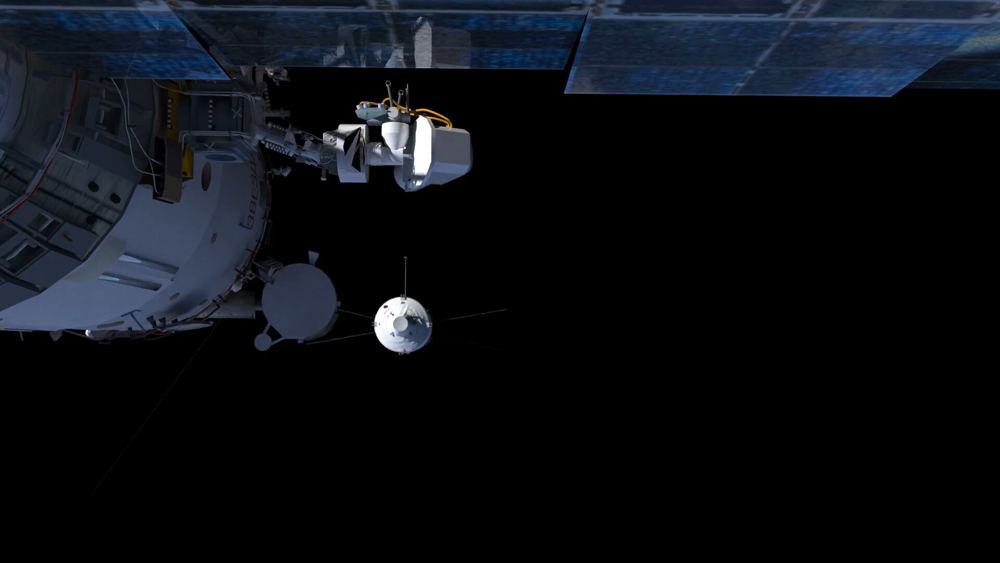
Virtuelle Testbeds
Systeme in ihrer vollständigen Einsatzumgebung erproben, bevor sie gebaut sind – mit physikalisch fundierter Simulation von Dynamik und Kinematik.
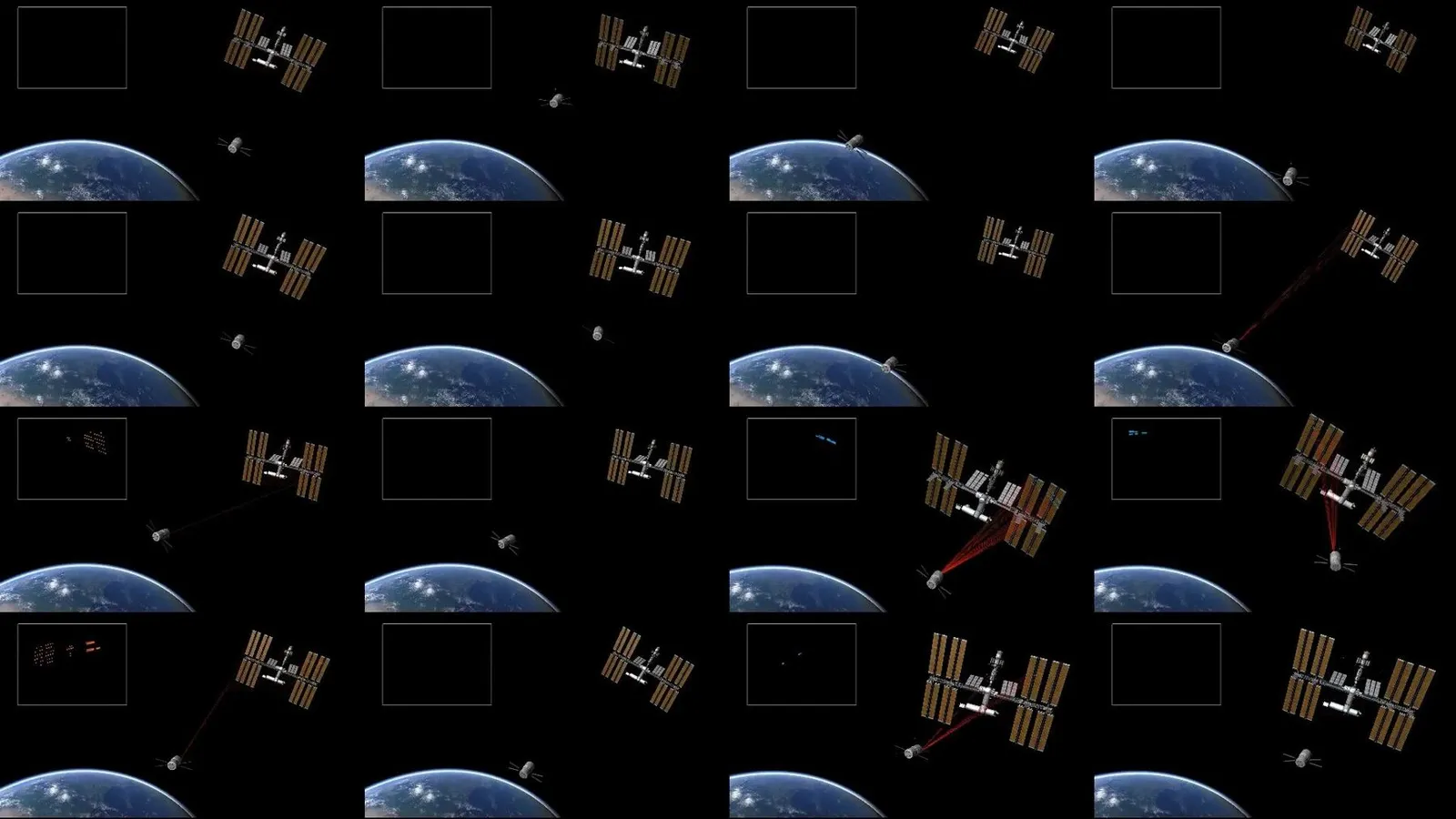
Szenario-Engineering
Einsatzszenarien und Entwurfsalternativen systematisch variieren und vergleichen, mit Rückführung der Ergebnisse ins Systemmodell.
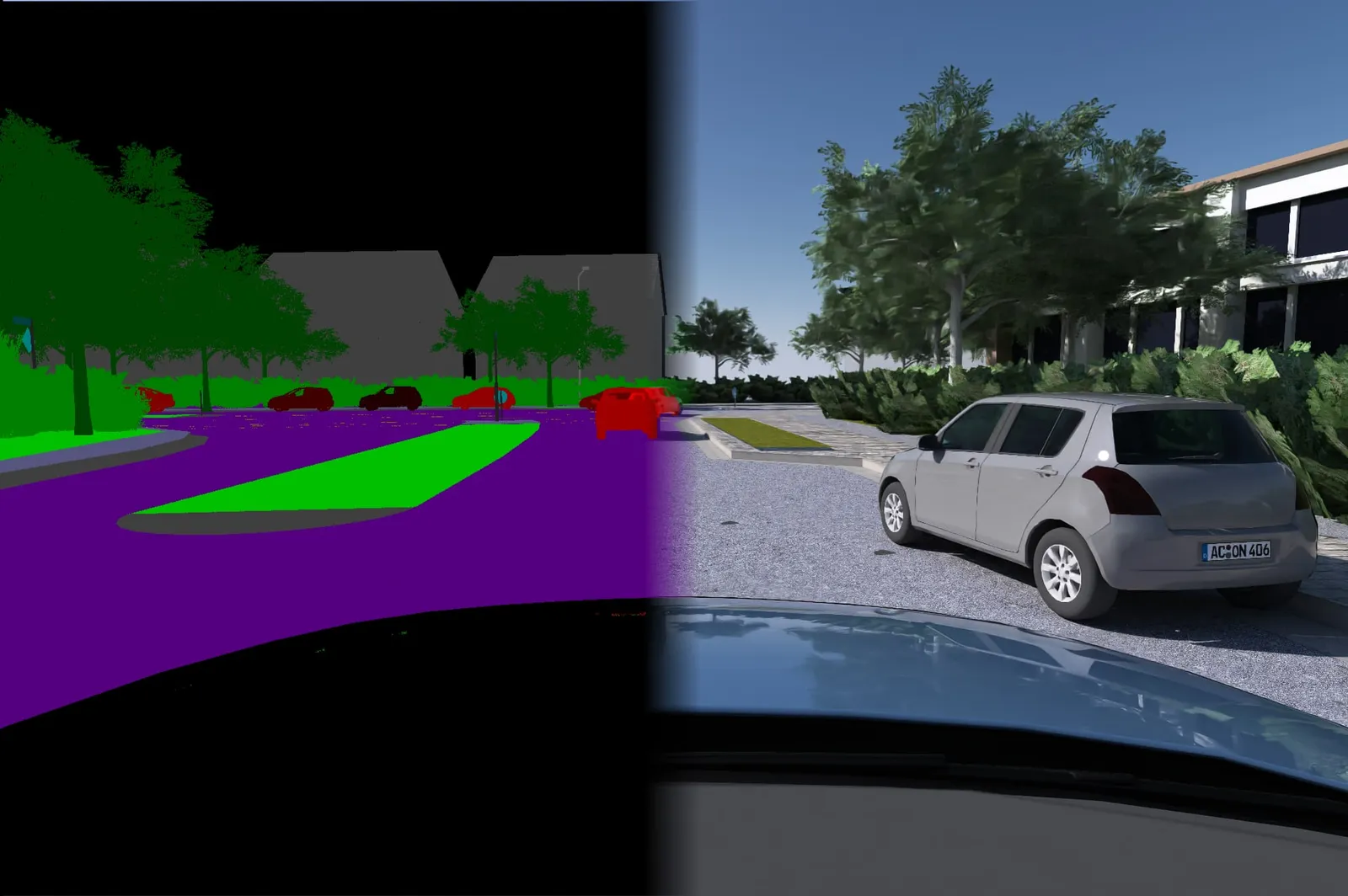
Sensorsimulation
Kameras, Lidar und weitere Sensoren realitätsnah simulieren, etwa für Training und Test von KI.

Hardware-in-the-Loop
Reale Sensoren, Steuerungen und Roboter mit der Simulation koppeln und im geschlossenen Kreis unter realitätsnahen Bedingungen testen.

Hybride Testbeds
Reale Versuchsaufbauten und ihre Digitalen Zwillinge Seite an Seite betreiben, um Simulationen an der Realität zu kalibrieren und zu validieren.

Virtuelle Inbetriebnahme
Anlagen und Steuerungen am Digitalen Zwilling in Betrieb nehmen, bevor die reale Anlage steht.

Verwaltungsschale und S³I
Digitale Zwillinge, Maschinen und Menschen sicher vernetzen – mit der Smart Systems Service Infrastructure (S³I) als IoT-Infrastruktur auf Basis der Industrie 4.0 Verwaltungsschale (Asset Administration Shell, AAS).
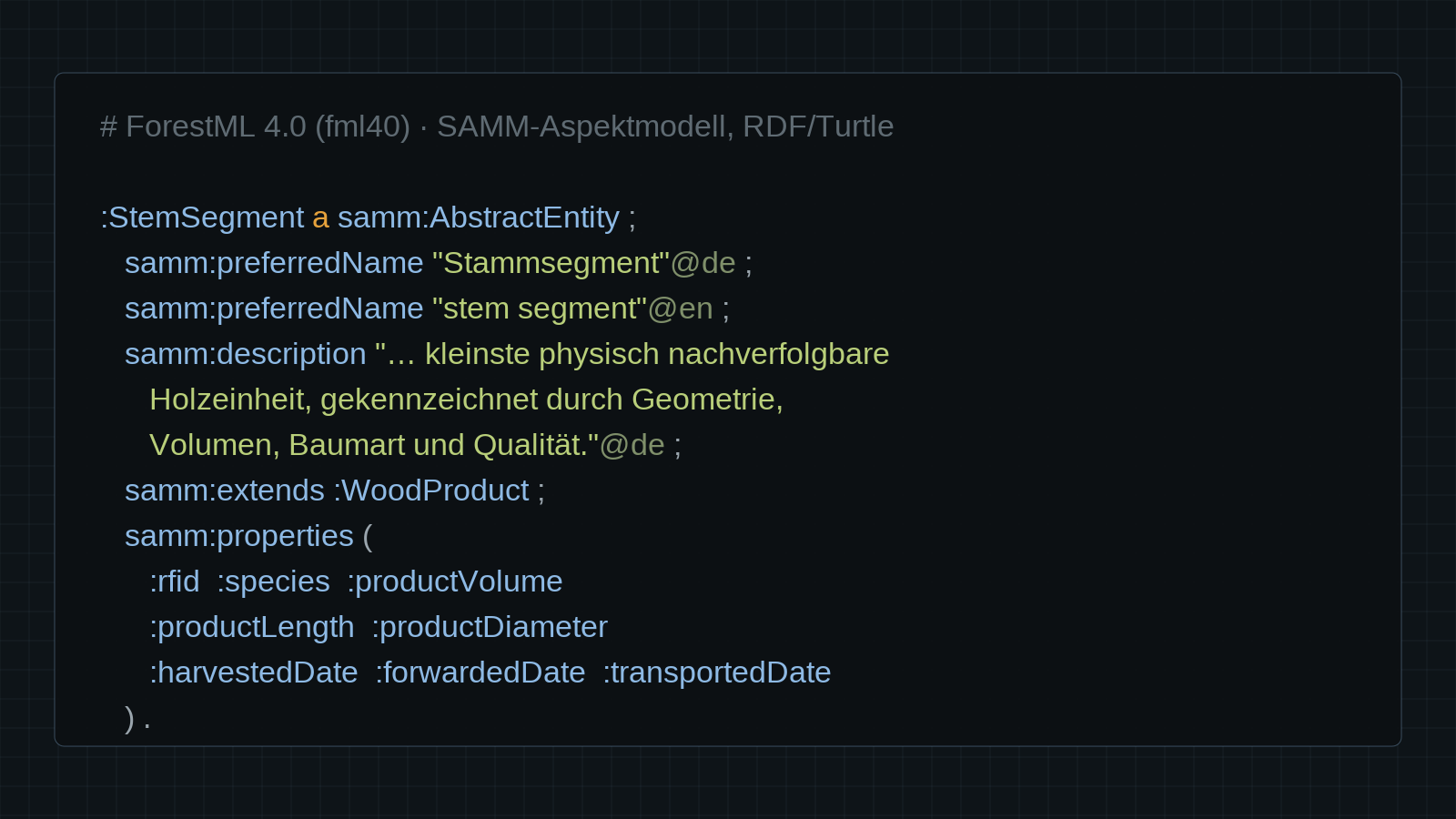
Datenmodellierung
Daten eine eindeutige, maschinenlesbare Bedeutung geben – von der Ontologie bis zum Digitalen Zwilling.
Prozessmodellierung und -steuerung
Organisationsübergreifende Abläufe so beschreiben, dass Menschen sie lesen können – und sie über Digitale Zwillinge automatisiert ausführen und beobachten.

Datenräume und Datentreuhand
Daten über Organisationsgrenzen hinweg souverän teilen – mit Datenraum-Konnektoren und nach den Prinzipien von Gaia-X.
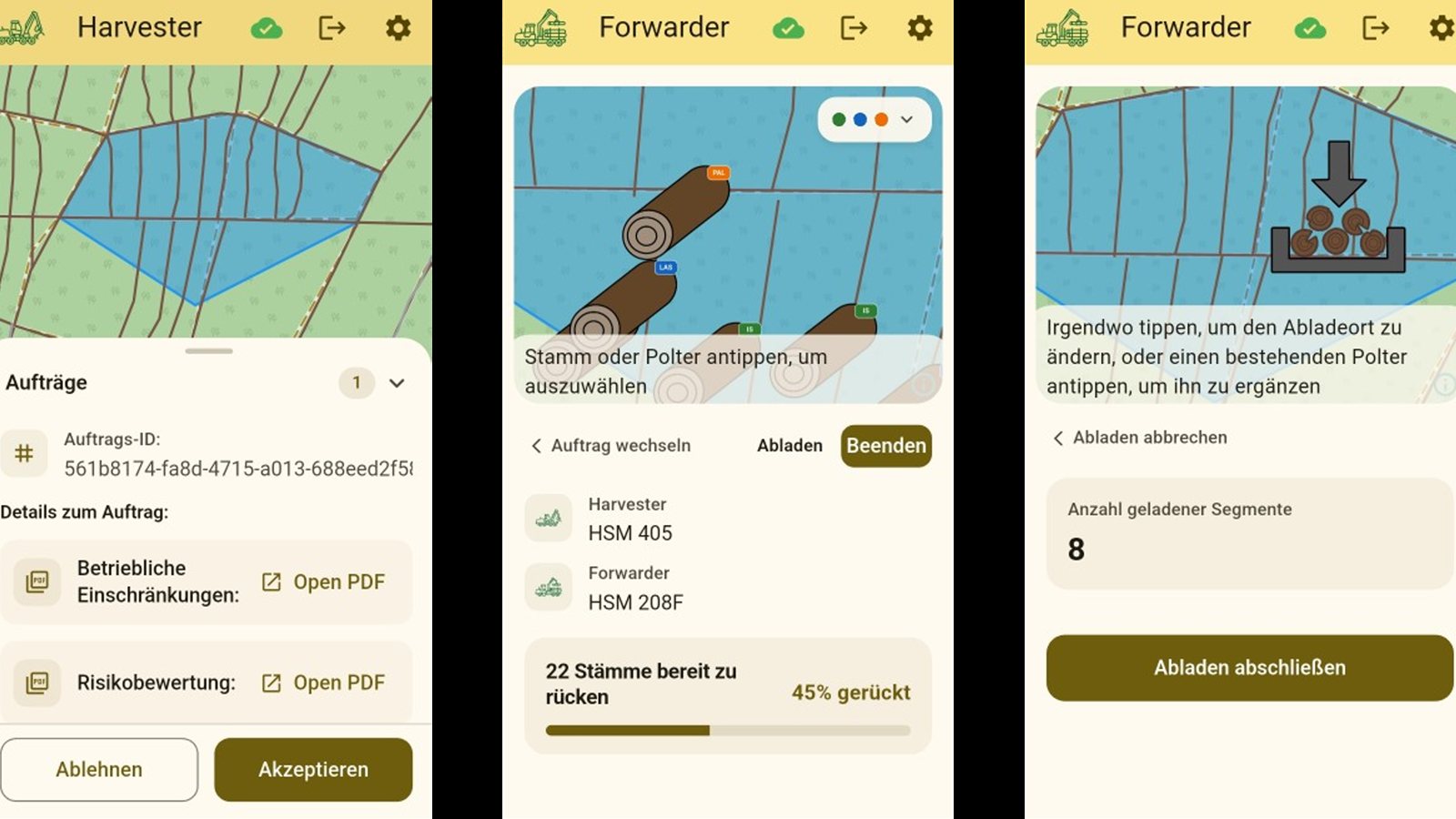
Apps und App-Entwicklung
Daten, Digitale Zwillinge und Prozesse zu den Menschen bringen, die mit ihnen arbeiten – auf Smartphone, Tablet und Desktop.
Virtuelle Realität, AR und CAVE
Schnittstellen, über die Menschen mit dem digitalen Abbild arbeiten.
Robotik ist mehr als Roboter: vom Wald bis in den Orbit.
Was wir für die Raumfahrt entwickeln, hilft auch im Wald, auf der Baustelle und in der Fabrik. Wähle ein Anwendungsfeld, um seine Projekte zu sehen.
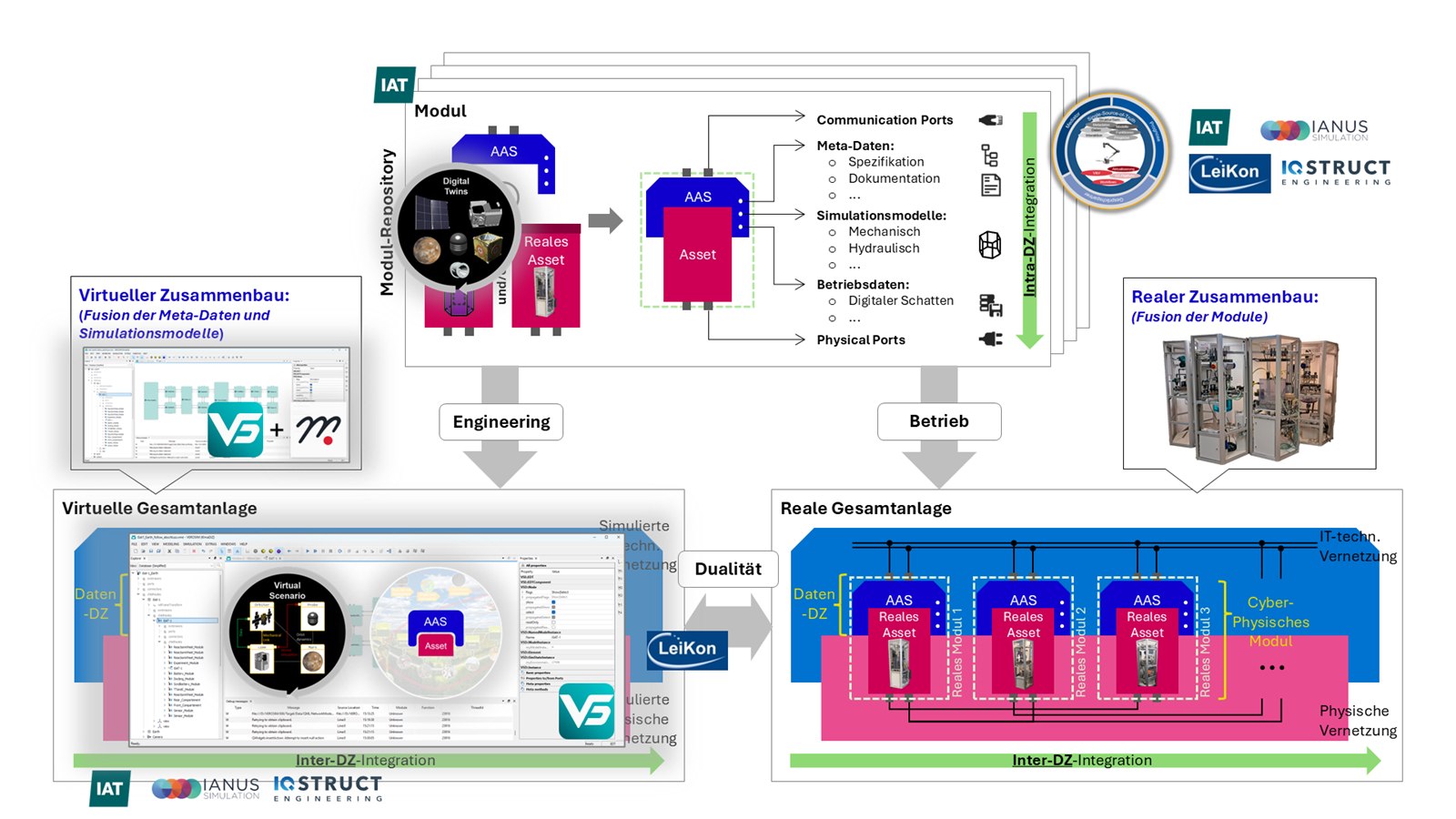
ADAPT
Aggregierte Digitale Zwillinge für anlagenhierarchie-, prozess- und lebenszyklusübergreifendes Datenmanagement und Simulation in der Prozesstechnik.
Zum Projekt
ArtemisGSE
Ein Hardware-in-the-Loop-Testaufbau, der reale Lidar-Sensoren aus der Raumfahrt mit einer virtuellen Missionsumgebung koppelt – aktuell im Einsatz zur Vorbereitung der Artemis-3-Mission.
Zum Projekt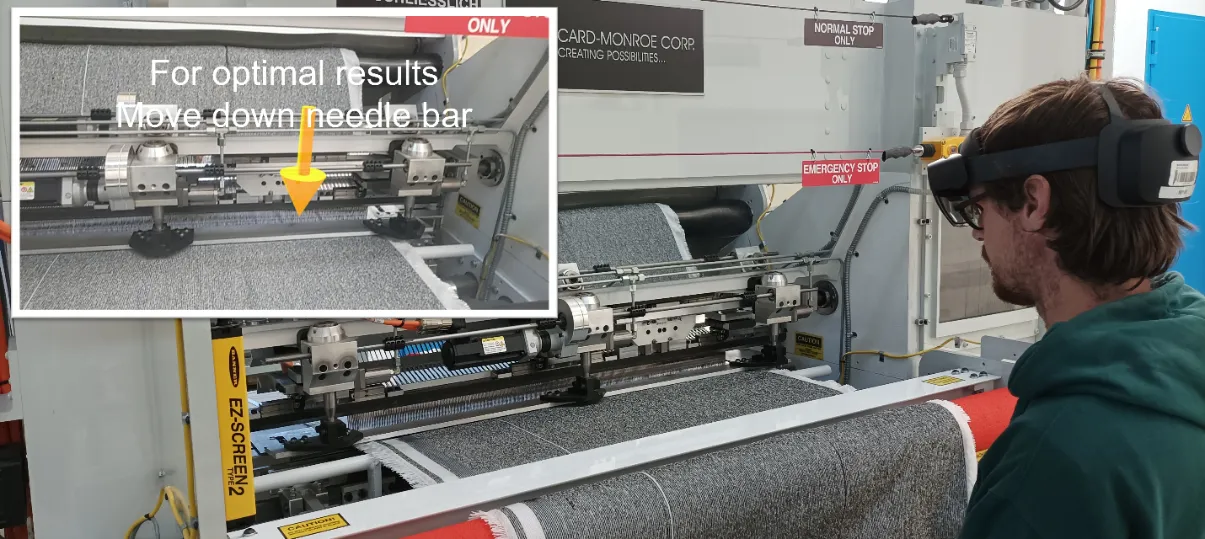
AsTeDiF
In AsTeDiF wird ein Assistenzsystem zur Unterstützung des Maschinenbedieners in betrieblichen Trainings- und Anlernprozessen an einer Tuftingmaschine entwickelt.
Zum Projekt
LivLabPRoFruit
Obstbauern in der Maas-Rhein-Region sehen sich zunehmendem wirtschaftlichem und ökologischem Druck ausgesetzt: von Arbeitskräftemangel und steigenden Kosten bis hin zur Notwendigkeit eines gezielteren Einsatzes von Betriebsmitteln.
Zum Projekt
SAFERWATER
Die Wasserwirtschaft steht vor großen Herausforderungen: Klimawandel, Bevölkerungswachstum und zunehmende (Cyber-) Angriffe gegen kritische Infrastrukturen erfordern innovative und nachhaltige Lösungen zur Sicherung der Wasserversorgung.
Zum Projekt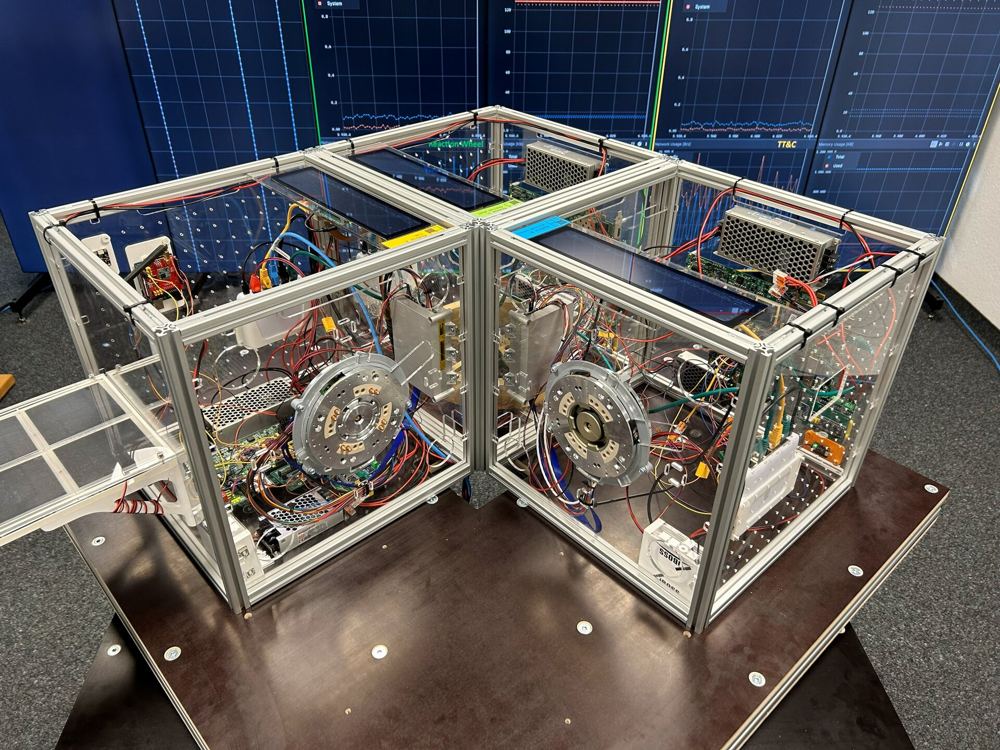
smartCASE
Standardisierte, wiederverwendbare Module für rekonfigurierbare Raumfahrtsysteme: Mit satAPPs lassen sich Satelliten im Orbit per Plug-and-Play erweitern, reparieren und umrüsten.
Zum Projekt
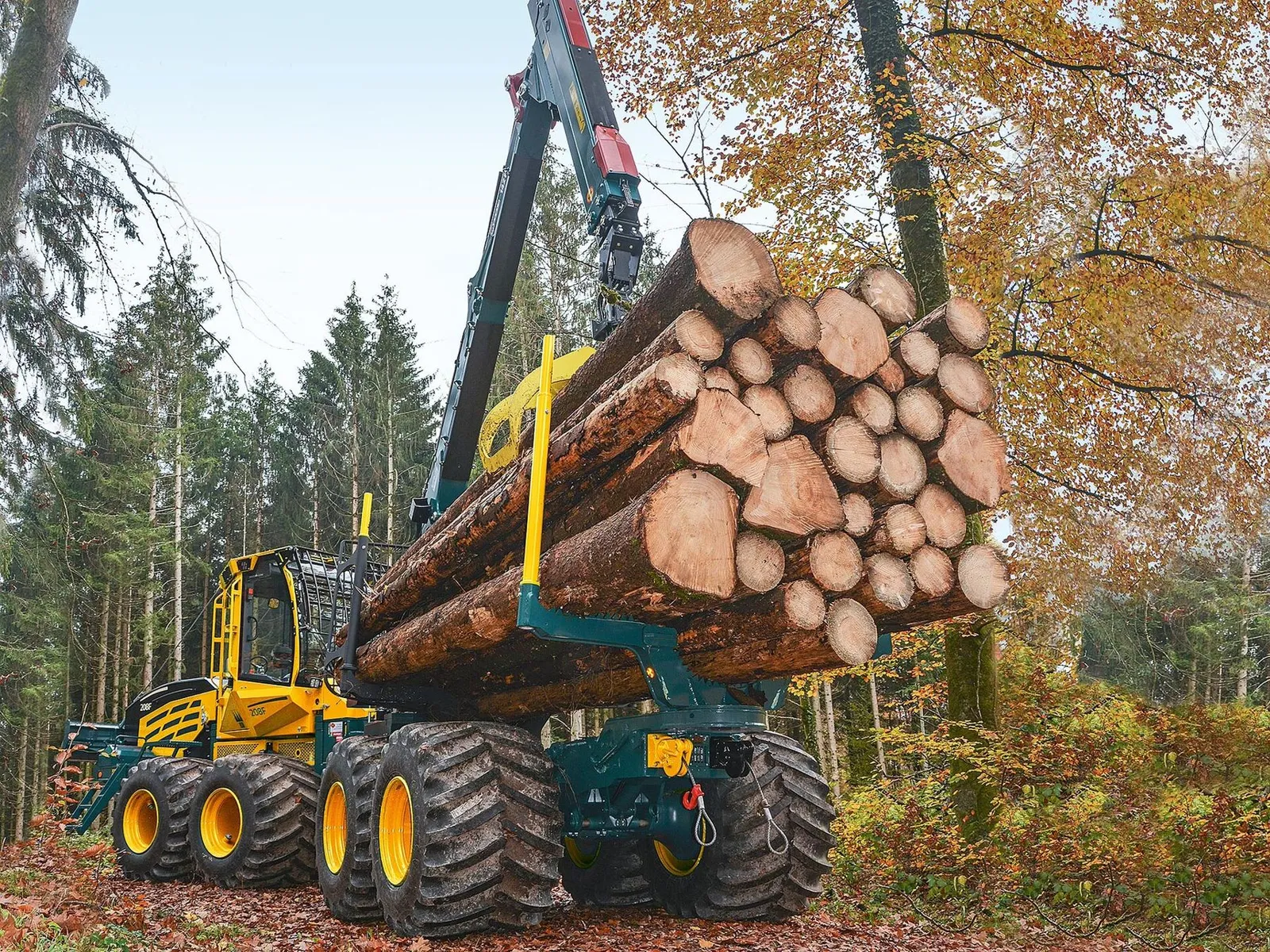
Smart Forestry Plus
Die Holzernte als Teil der multifunktionalen Waldwirtschaft bewegt sich im Spannungsfeld zwischen ökonomischen, ökologischen und gesellschaftlichen Anforderungen. Alle Beteiligten sind zu einer bedarfsgerechten Waldnutzung verpflichtet.
Zum Projekt
smartREACH
Nachfolgeprojekt von OUTREACH. Beschreibung folgt.
Zum Projekt
SmaSiKaFE
Ziel des Vorhabens SmaSiKaFE („Smarte und sichere Kalamitätsflächenernte“) ist es, die Ernte von Kalamitätsholz aus Kalamitätsflächen durch eine durchgehende digitale Unterstützung sowohl sicher als auch möglichst ökologisch und ökonomisch …
Zum Projekt
ViTOS-Mini-Lidar
Ein Digitaler Zwilling des Mini-Lidars µRVS von Jena-Optronik: photonengenaue Lidar-Simulation, um robuste Detektionsalgorithmen für Kleinsatelliten und Rover virtuell zu entwickeln und abzusichern.
Zum Projekt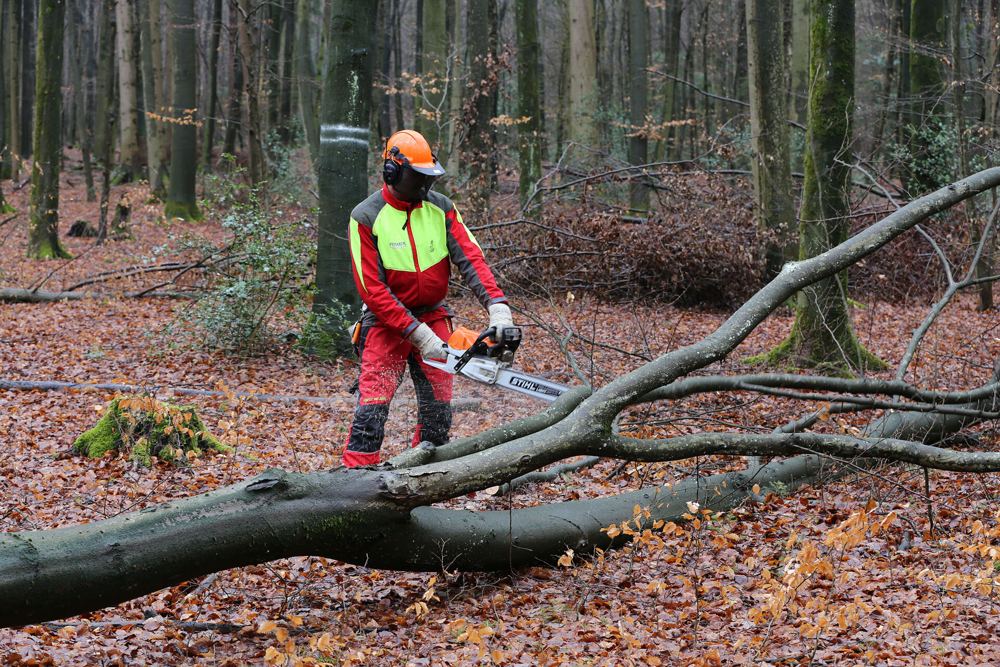
ZukunftsWald
Konzeptphase für ein Innovationsnetzwerk zur nachhaltigen Gestaltung von Wäldern im Klimawandel – mit Digitalen Zwillingen, KI und Reallaboren im Rheinischen Revier.
Zum Projekt
BaSys4Forestry
Weiterentwicklung und Adaption des BaSys-4-Systems zur Anwendung in der Forstwirtschaft
Zum Projekt
CC4Wind
Das Projekt „Climate Community for Wind“ (CC4Wind) untersucht die Akzeptanz von Windkraft. Hierfür wird eine App entwickelt, die u.a.
Zum Projekt
Centauro
Szenarios wie der Vorfall im Nuklearkraftwerk Fukushima zeigen, dass die aktuell verfügbaren Fähigkeiten von robotischen Systemen im Katastrophenschutz nicht ausreichend sind, um Rettungskräfte vor Ort angemessen zu unterstützen.
Zum Projekt
ClusterWIS
Ziel von ClusterWIS ist die Etablierung eines nachhaltigen Rohstoffmanagements und einer effizienten Holz- und Biomassemobilisierung – übergreifend im gesamten Cluster Wald und Holz NRW.
Zum Projekt
CO2For-IT
Ziel des Forschungsvorhabens CO2For-IT ist die Entwicklung, prototypische Umsetzung und praktische Erprobung des „Forest Data Space“ zur umfassenden Umsetzung einer nachhaltigen und klimapositiven Holzwertschöpfung in der Forst- und …
Zum Projekt
DeLas
Das Ziel des Projekts „DeLas“ ist die Entwicklung einer innovativen Entwicklungsumgebung für Prozesse in der automatisierten Präzisionsmontage, um die bestehende Lücke zwischen der Produktentwicklung, der Anlagenplanung und …
Zum Projekt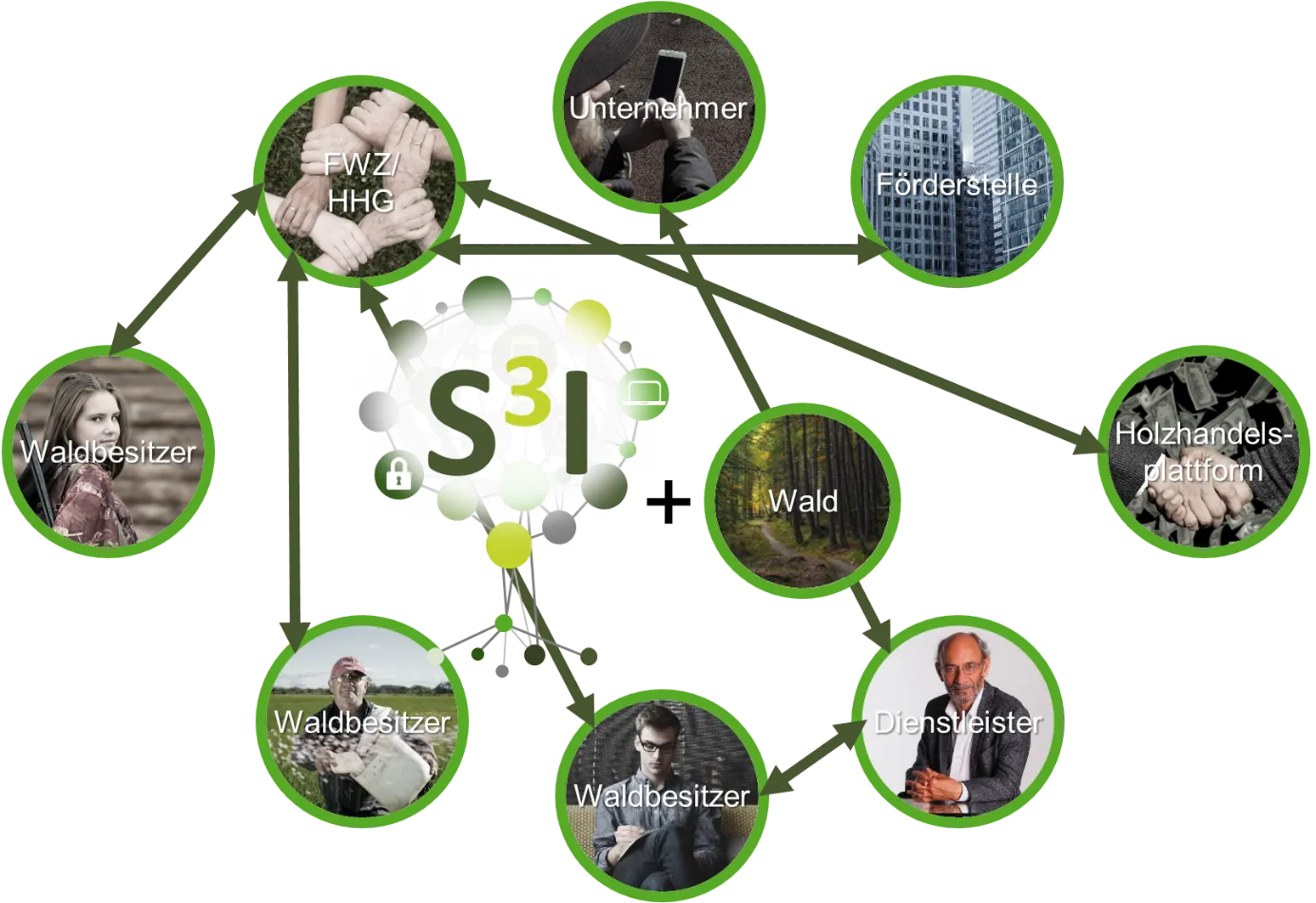
DigiKomForst
Ziel des Projekts DigiKomForst ist die Erstellung eines prototypischen Systems zum einfachen und sicheren Datenaustausch zwischen den Beteiligten im Bereich der Waldbewirtschaftung.
Zum Projekt
DTMForst
Ein Datentreuhandmodell für die Forstwirtschaft mit dem Ziel, vertrauensvolles, transparentes und sicheres Datenteilen einfach und praxisnah umzusetzen
Zum Projekt
FastMap
Eine wichtige Fragestellung bei der Exploration fremder Planeten durch in großen Teilen autonom agierende mobile Roboter ist die Bestimmung der absoluten Position dieser Systeme auf dem Planeten.
Zum Projekt
FeDiNAR
FeDiNAR – Fehler Didaktisch Nutzbar Machen mit Augmented Reality
Zum Projekt
iBOSS
Heutige Satelliten sind meist monolithische Systeme ohne die Möglichkeit zur Wartung, Instandhaltung oder Rekonfiguration.
Zum Projekt
IFVK
Entwicklung einer neuartigen, digitalisierten Fertigungsstrategie für die automatisierte Produktion individualisierter FVK-Bauteile (IFVK) In dem Projekt IFVK wird ein Bauteilzwilling entwickelt, der die gesamte Prozesskette der Fertigung …
Zum Projekt
IntellAct
In dem Projekt „IntellAct“ wird ein System entwickelt, das von Menschen demonstrierte Montageaufgaben durch Beobachtung erlernen und mit Robotern wiedergeben kann.
Zum Projekt
INVIRTES
Grundlage für die im Rahmen von INVIRTES (Integrierte Entwicklung komplexer Systeme mit Virtuellen Testbeds auf der Basis zentraler Weltmodelle und moderner Konzepte der eRobotik) zu entwickelnden Methoden, Komponenten und Prozesse ist die …
Zum Projekt
iWald
Im „iWald“-Projekt (http://www.iwald.net/) wird ein neues Dienstleistungskonzept für (vor allem junge) Waldbesitzer entwickelt, um den Herausforderungen des Klimawandels an die Waldbewirtschaftung und der zunehmenden Urbanisierung von …
Zum Projekt
KImaDiZ
Künstliche Intelligenz (KI) hat sich in den letzten Jahren zu einem Basisinnovator und Treiber für Digitalisierung und autonome Systeme in allen Lebensbereichen entwickelt.
Zum Projekt
KWH4.0
Charakteristisch für den Branchencluster Wald und Holz ist die Vielschichtigkeit und Heterogenität seiner Struktur, die Anzahl der häufig konträren Ziele seiner Akteure und die höchst dezentral ablaufenden Prozesse.
Zum Projekt
Off-Highway Twins 2
Fusion von Maschinen- und Geodaten in Digitalen Zwillingen von Infrastrukturobjekten und deren Umgebung für die Erfassung, Planung, Bau, Betrieb und Instandhaltung
Zum Projekt
OUTREACH
Verbundvorhaben zur Entwicklung, prototypischen Umsetzung und Bewertung eines neuen Maschinenkonzepts zur Mechanisierung des Fällens und Beiseilens des Mittelblocks bei 40 m Fahrgassenabstand.
Zum Projekt
ProDemo
Die Projektserie „ProPemo“ beschäftigt sich mit der Roboterprogrammierung „by Demonstration“, bzw. der 3D-Modellerstellung „by Demonstration“, d.h. indem ein menschlicher Bediener die Transport- oder Montageaufgaben vormacht.
Zum Projekt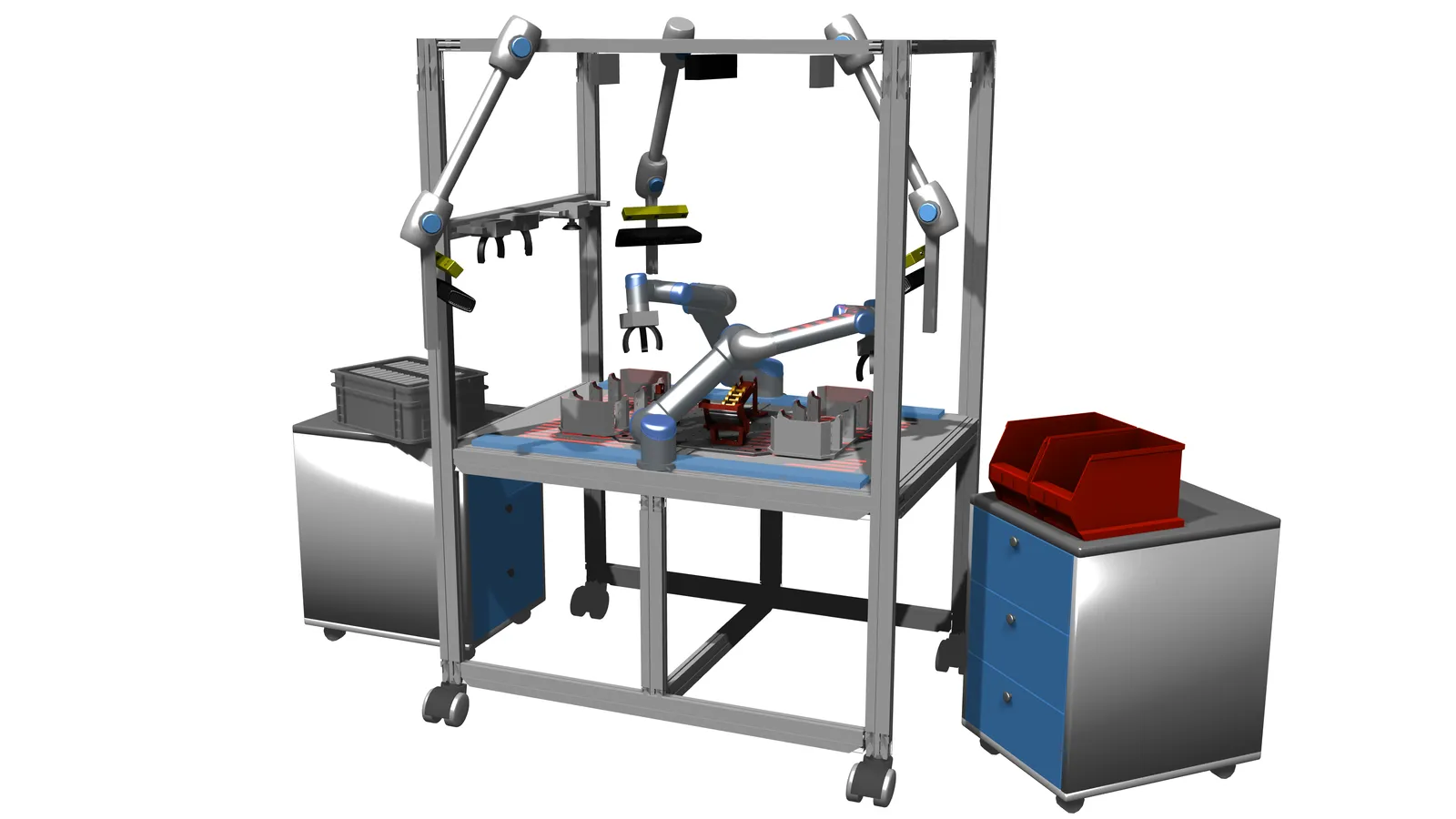
ReconCell
Im Projekt „ReconCell“ wird eine neuartige Roboterzelle zur automatisierten Montage entwickelt, die mit zugehörigen Tools zur Prozessentwicklung und wirtschaftlichen Bewertung von Einsatzszenarien besonders die Bedürfnisse kleiner und …
Zum Projekt
S3I-X
Das Projekt S3I-X zielt darauf ab, zwei entgegengesetzte Anforderungen zu vereinen.
Zum Projekt
SCALAB
Das Projekt SCALAB (Scalable Automation for Emerging Lab Production) hat zum Ziel, die Automatisierung des Bereichs der mikrooptischen Montage zu systematisieren.
Zum Projekt
SELOK
Eine wichtige Fragestellung bei der Exploration fremder Planeten durch in großen Teilen autonom agierende mobile Roboter ist die Bestimmung der absoluten Position dieser Systeme auf dem Planeten.
Zum Projekt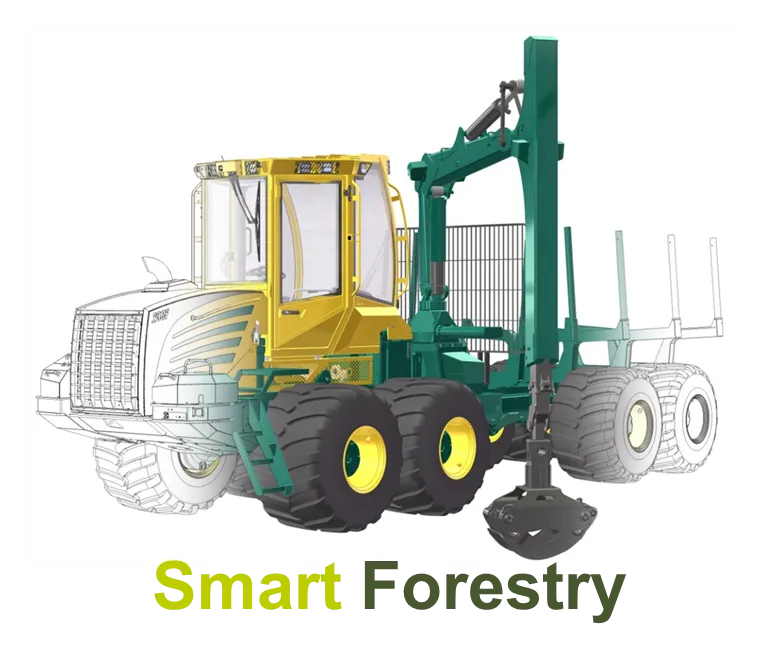
Smart Forestry
Die Holzernte als Teil der multifunktionalen Waldwirtschaft bewegt sich immer mehr im Spannungsfeld zwischen ökonomischen, ökologischen und gesellschaftlichen Anforderungen.
Zum Projekt
T-EXDIZ
Eine Tuftingmaschine bestickt ein Trägermaterial durch das Zusammenspiel von Nadel, Greifer und Phase. Das Einstellen erfolgt in vielen Fällen noch über Exzenter und Hebel, die verändert werden um Hub, Offset und Phase einzustellen.
Zum Projekt
Twins4Space
Das Twins4Space-Projekt entwickelt eine dezentrale Softwareplattform zur Orchestrierung von Digitalen Zwillingen und Diensten, die hochgradig fehlertolerante und rekonfigurierbare Raumfahrtsysteme ermöglicht.
Zum Projekt
Virtual Crater
Im Rahmen des Projekts Virtual Crater wurde eine virtuellen Testumgebung entwickelt, die es ermöglicht, Robotersysteme kostengünstig in einer realitätsnah simulierten, lunaren Kraterlandschaft zu programmieren, zu testen und zu optimieren.
Zum Projekt
Virtual Robotics Lab
Ein Bild sagt mehr als 1000 Worte, ein Video mehr als 1000 Bilder – und eine interaktive Simulation mehr als 1000 Videos. Menschen müssen Dinge sehen, erleben, anfassen, erfahren, um sie nachhaltig zu verstehen.
Zum ProjektVirtueller Wald
Siehe http://www.virtueller-wald.de.
Zum Projekt
ViTOS
Optische Sensoren sind unverzichtbar in nahezu allen Raumfahrtanwendungen. Im Rahmen robotischer Weltraummissionen kommt ihnen eine besondere Bedeutung zu, denn hier sind hochauflösende Kamerabilder oder Abstandmessungen durch Laserscanner …
Zum Projekt
ViTOS-3
ViTOS-3 erweitert das ViTOS-Testbed um die simulationsbasierte Absicherung von Sample-Return-Missionen, standardisierte Simulationsschnittstellen und eine KI-gestützte Sensorsimulation mit höherer Simulationstiefe bei geringerer Rechenzeit.
Zum Projekt
ViTOS-II
Die Entwicklung neuer Sensorhard- und -software im Virtual Sensor Testbed (siehe auch ViTOS) ist der erste Schritt im Lebenszyklus optischer Sensoren.
Zum Projekt
ViTOS-MSR
Ein Digitaler Systemzwilling zur virtuellen Absicherung von Dual-Lidar-Systemen – mit physikalischen Modellen, die gegenseitige Sensorstörungen (Crosstalk) realitätsnah vorhersagen.
Zum Projekt
Waldboden 4.0
Der Waldboden ist einer der wichtigsten Produktionsfaktoren für die Forstwirtschaft. Er bildet den Lebensraum für Pflanzen und Tiere, ist Nährstoff-, Wasser- und Kohlenstoffspeicher für das gesamte Ökosystem Wald.
Zum ProjektKein Projekt passt zu diesem Filter.
Von der Forschung über den Prototypen zum Produkt
Ziel unserer Forschung ist ein Mehrwert für spätere Anwender. Wir erarbeiten die wissenschaftliche Basis der Themen von morgen und setzen sie gemeinsam mit unseren Partnern in konkrete Lösungen um.
- 1Forschung

Institut für Mensch-Maschine-Interaktion
Das MMI gestaltet zukunftsweisende Forschungsprojekte und erarbeitet die wissenschaftliche Basis Ihrer Themen von morgen.
- 2Transfer

RIF Institut für Forschung und Transfer e. V.
Vom Forschungsprojekt zum Prototypen: Mit erfolgreichen Technologietransfer-Partnern wie dem RIF e. V. bringen wir neue und moderne Verfahren in die Praxis. Aus wissenschaftlichen Ideen und neuen Technologien entstehen gemeinsam mit den späteren Anwendern praxistaugliche Prototypen.
- 3Lösungen

VEROSIM Solutions
Vom Prototypen zum Produkt: Auch die Entwicklung von Systemlösungen für Unternehmen, Behörden und private Anwender begleiten wir mit unserem Know-how und gemeinsam mit erfahrenen Partnern. Ausgereifte Innovationen werden effizient in den Arbeitsalltag integriert.
Ob Lösungen von der Stange, Industrietransfers mit Pilotcharakter, Auftrags- oder Grundlagenforschung – die Verbundpartner bringen Sie weiter, kompetent und praxisnah.
Unsere Veröffentlichungen
Alle Veröffentlichungen des Instituts für Mensch-Maschine-Interaktion finden Sie auf dem Publikationsserver der RWTH Aachen. Dort können Sie sie auch nach Jahr, Art und weiteren Merkmalen filtern.
Forschung, die man sehen kann
Über 100 Videos aus unseren Projekten – Simulationen, Virtuelle Testbeds und Digitale Zwillinge von der Raumfahrt bis zum Wald. Ein Klick öffnet das Video auf YouTube.
 1:04
Traffic Simulation and raytracing in urban environments
This video shows a raytracing simulation in a highly-detailed large urban scene in our Virtual Testbed VEROSIM. The integration of a third-party traffic simulator (https://eclipse.dev/sumo/) brings the scene to life.
Auf YouTube ansehen 2:58
Physical and virtual simulation of close range rendezvous and docking maneuver
This video shows a simulated close range approach of a LiDAR sensor to the ISS in the context of a rendezvous and docking maneuver. The white target structure is a 1:1 mockup of the international docking adapter (IDA).
Auf YouTube ansehen 2:36
Physical and virtual simulation of far range rendezvous and docking maneuver
This video shows a simulated far range approach of a LiDAR sensor to the ISS in the context of a rendezvous and docking maneuver. The target is a 3D model of the ISS on a 1:100 scale, mounted on a robotic arm.
Auf YouTube ansehen 1:33
Parallel Simulation of Experimentable Digital Twins: Wood harvesting scenario
A network of interacting Experimentable Digital Twins is distributed and simulated in parallel on 17 threads. For this purpose, a new approach for modular state space partitioning and replication was developed.
Auf YouTube ansehen 1:20
Virtual driving scenarios for generation of training and validation data
The performance and reliability of AI-based driver assistance systems depend on the quantity and quality of training and validation data.
Auf YouTube ansehen 3:17
Digital Twin-based assembly for manufacturing SMEs
The video demonstrates the Digital Twin-based assembly of a light housing using a reconfigurable robotic workcell (ReconCell).
Auf YouTube ansehen 2:29
Factory 4.0 - speaker assembly simulation
This video demonstrates the capabilities of VEROSIM to simulate complex assembly and processing lines.
Auf YouTube ansehen 123:09
Smart Forestry Abschlussveranstaltung
Aufzeichnung der Abschlussveranstaltung des Forschungsprojekts Smart Forestry vom 20.9.2024.
Auf YouTube ansehen 3:55
Smart Forestry - Intelligente und clusterübergreifend integrierte Holzernte
Die Holzernte als Teil der multifunktionalen Waldwirtschaft bewegt sich im Spannungsfeld zwischen ökonomischen, ökologischen und gesellschaftlichen Anforderungen.
Auf YouTube ansehen 1:27
Lidar-based Docking of the ATV spacecraft with the virtual ISS
Testing flight software on Earth before sending it into space is essential for a successful space mission. Therefore, extensive testing must be performed not only in real but especially in virtual test environments.
Auf YouTube ansehen 0:48
Simulation-based synthetic data
This video presents the potential of synthetic data generation by iterative parameter randomization in simulations using a model of the Halifax Street in Aachen.
Auf YouTube ansehen 4:08
Autonomous Parking based on Reinforcement Rearning and Digital Twins
The video shows a car learning to drive into a parking lot using reinforcement learning. The scenario is performed in a virtual testbed that enables the following key aspects:
Auf YouTube ansehen 1:22
Simulation of LiDAR sensor during moon landing with dynamic distortion
Simulation of a moon landing trajectory in the ViTOS testbed using different settings for the Digital Twin of the LiDAR sensor.
Auf YouTube ansehen 1:52
MetaHuman-based neurofeedback for emotional regulation
As part of the International Research Space (IRS) project SEE-VR, the Department of Psychiatry, Psychotherapy and Psychosomatics at the University Hospital RWTH Aachen (UKA) and chairs of neuroscience at Maastricht …
Auf YouTube ansehen 1:40
Dashboard "Digital Waterdrop"
In this video, the “Digital Waterdrop” dashboard is shown that visualizes sensor data from the Möhnesee and surrounding forests. The dashboard uses services integrated using S3I to query the data.
Auf YouTube ansehen 2:36
Hybrid Lab: Augmented Reality
Testing flight hardware on Earth before sending it to space is essential for a successful space mission. Therefore, extensive testing is performed in both real and virtual test environments.
Auf YouTube ansehen 1:05
Hybrid Lab: Lidar approaches International Space Station (ISS)
Testing flight hardware on Earth before sending it to space is essential for a successful space mission.
Auf YouTube ansehen 1:05
Hybrid Lab: Lidar approaches International Docking Adapter (IDA)
Testing flight hardware on Earth before sending it into space is essential for a successful space mission.
Auf YouTube ansehen 1:46
VEROSIM simulation of Agena Gemini docking controlled by the DSpace Scalexio
This video shows an example of a hardware-in-the-loop simulation, where the controller of the Agena Gemini thrusters was implemented using the real-time capable hardware "Scalexio" from DSpace.
Auf YouTube ansehen 2:14
AI-based Sensor Simulation: Transforming Ground Truth to Color Images
In the context of physical sensor simulation, ray tracing algorithms are the gold standard for generating highly realistic sensor data (e.g. camera images) based on physical models previously created by engineers.
Auf YouTube ansehen 9:08
X-in-the-Loop with VEROSIM Digital Twins
VEROSIM Digital twins enable continuous testing of ADAS right from the beginning of the development process—even before the real (sensor) hardware is available or testing vehicles are set up.
Auf YouTube ansehen 1:21
Comparison of Lidar Scan Frequencies for Pose Estimation in On-Orbit Servicing
On-Orbit Satellite Servicing will be an important part of the future of international space activities. Spacecraft will be equipped with Lidar sensors to enable automatic rendezvous & docking with the target satellite.
Auf YouTube ansehen 0:44
Demonstration of ASAM Open Simulation Interface for VEROSIM (Sensor Control and Data Exchange)
In the context of the Mars Sample Return Mission, the Virtual Testbed VEROSIM is used to simulate the approach of the Earth Return Orbiter to the sample container in Mars orbit.
Auf YouTube ansehen 0:51
Multibody orbital dynamics simulation in VEROSIM
This video demonstrates multibody gravitation simulation in VEROSIM. It shows fast-forward simulation of the trajectories of celestial bodies and spacecrafts with different masses and initial conditions.
Auf YouTube ansehen 0:48
Multi-Lane highway driving simulation environment
This video shows a digital twin of a highway section in Karlsruhe, Germany, simulated and rendered in the VEROSIM testbed. Traffic simulation is implemented with SUMO (https://sumo.dlr.de/docs/index.html).
Auf YouTube ansehen 1:47
Autonomous rover sample retrieval on Mars
This video shows the simulation of an autonomous rover on the martian surface. The rover picks up a sample container and returns it to the base station.
Auf YouTube ansehen 1:26
AI-based Sensor Simulation: Which AI should I use and how?
Ray tracing algorithms serve as the gold standard in physical sensor simulation, enabling the generation of highly realistic sensor data (e.g., camera images) based on pre-established physical models crafted by …
Auf YouTube ansehen 0:41
AI-Accelerated Denoising in Sensor Simulation: Benefits of Adding Ground Truth
The utilization of ray tracing for sensor simulation enables the generation of bias-free simulation results, such as camera images, with a high level of physical correctness.
Auf YouTube ansehen 0:09
New improved MDL road material
The video shows a closeup view of the new road material. The material is composed and parametrized in MDL (nVidia Material Description Language).
Auf YouTube ansehen 0:14
Road scene under different lighting and weather conditions
This video shows a road scene in VEROSIM under different lighting and weather conditions, rendered with a simulated sensor with raytracing capabilities.
Auf YouTube ansehen 3:23
BaSys4Forestry - Vernetzung forstwirtschaftlicher Prozesse mit der Industrie 4.0-Verwaltungsschale
Im Projekt BaSys4Forestry [1] vernetzte das MMI zusammen mit seinen Partnern forstwirtschaftliche Prozesse rund um Waldmanagement und Holzverkauf auf Grundlage eines Digitalen Zwillings des Waldes.
Auf YouTube ansehen 0:35
Point cloud generation using LiDAR during the approach to the ISS
Point cloud generation using a Digital Twin of the RVS-3000 LiDAR during the approach to the ISS.
Auf YouTube ansehen 3:01
AI-based Path Planning - Auto. scenario variation to explore a Mars-like surf. using Reinf. Learning
The video outlines the main steps to configure, variate and execute one or multiple reinforcement learning processes for controlling a rover on a Mars-like surface in VEROSIM. These steps are:
Auf YouTube ansehen 0:38
Comparison of Lidar Patterns for ISS Rendezvous & Docking
Design decisions during system development must consider the intended operational environment.
Auf YouTube ansehen 1:08
Rim Factory 360° Panorama
This is a 360° video of an exemplary rim production site. You may use your tablet, smartphone or VR devices to dive into this virtual production line.
Auf YouTube ansehen 0:36
Annotated Sensor Data for AI Training and AI-based Simulation
While pure sensor data (e.g., camera recordings from real test drives) is available on a massive scale, annotated sensor data remains rare and cost-intensive to generate.
Auf YouTube ansehen 2:12
AI-based pose estimation for the automatic approach to the ISS
Digital twins are used to generate reality-compliant training data to train and validate an AI-based position estimator.
Auf YouTube ansehen 1:52
AI-based Path Planning - Using Reinforcement Learning for exploring a Mars-like surface
The video outlines the main steps to configure and execute a reinforcement learning process for controlling a rover. These steps are:
Auf YouTube ansehen 1:05
Lidar Simulation: Validation of Dynamic Distortion in Hybrid Laboratory
The validation of sensor models and simulations is crucial for obtaining reliable simulation results.
Auf YouTube ansehen 2:36
MyiSAT - Configure your individual Satellite
A web-based guided process to configure an individual satellite, based on modular and standardized building blocks.
Auf YouTube ansehen 3:31
Developing modular Spacecrafts with a Virtual Testbed
This video illustrates how to use the Virtual Testbed to develop and integrate a new component for a satellite based on modular building blocks.
Auf YouTube ansehen 0:27
Extended labeling mechanisms
Mechanisms for labeling additional data within a video stream in the automotive context.
Auf YouTube ansehen 2:42
On-Orbit-Servicing
Servicing a Spacecraft based on modular Building Blocks
Auf YouTube ansehen 1:10
On-Orbit-Assembly
A VR based approach for On-Orbit-Assembly in low earth orbit.
Auf YouTube ansehen 6:20
On-Orbit-Servicing
Concept for possible on-orbit servicing scenarios in low-earth orbit. A servicer is loaded at a warehouse with a module in order to transport it to a target satellite and then exchange it as part of a servicing process.
Auf YouTube ansehen 1:09
On-Orbit-Servicing, Upgrade of a modular Spacecraft in Geostationary Orbit
Robotic servicing of a modular Spacecraft in geostationary orbit.
Auf YouTube ansehen 1:02
Spacecrafts in different Orbits
Analyzing the effects of different altitudes and inclinations to determine the area covered by the antennas on the earth and how long it takes to cover all reachable areas.
Auf YouTube ansehen 0:36
Physical Simulation of Soiled Camera Lenses
The development of advanced driver assistance systems and automated driving functions often requires massive data for the testing and training of artificial intelligence, especially when it comes to neural networks.
Auf YouTube ansehen 0:53
Physical Simulation of an Automotive Front Camera
The development of advanced driver assistance systems and automated driving functions often requires massive data for the testing and training of artificial intelligence, especially when it comes to neural networks.
Auf YouTube ansehen 5:58
iWald - a forest consultancy service
iWald is an app-based consulting offer for forest owners that connects them with digital twins of their forest stands, with software services (for remote sensing, tree growth simulation, forest rating ...), and with …
Auf YouTube ansehen 1:07
Physical Simulation of a Soiled Camera Monitoring System
The development of advanced driver assistance systems and automated driving functions often requires massive data for the testing and training of artificial intelligence, especially when it comes to neural networks.
Auf YouTube ansehen 10:20
S3I for direct funding of forestry servic
This demonstrator from the Center of Excellence for Forestry 4.0 (Kompetenzzentrum Wald und Holz 4.0 (KWH4.0), https://www.kwh40.de/) shows the use of the Smart Systems Service Infrastructure (S³I, …
Auf YouTube ansehen 1:07
Simulation of Soiled Camera Lenses: Phenomenological versus Physical
The development of advanced driver assistance systems and automated driving functions often requires massive data for the testing and training of artificial intelligence, especially when it comes to neural networks.
Auf YouTube ansehen 11:39
Forest Panorama 360°
This is a 360° video of a European forest site. You may use your tablet, smartphone or VR devices to dive into this virtual forest.
Auf YouTube ansehen 1:52
Dashboard in the gamified Smart Forest Lab
The 2D and 3D dashboards from the Center of Excellence for Forestry 4.0's (Kompetenzzentrum Wald und Holz 4.0 (KWH4.0), https://www.kwh40.de/) gamified Smart Forest Lab (gSFL) show live status values of various assets …
Auf YouTube ansehen 1:14
Real-time visualisation of point clouds captured by airborne laser scanner
or the inventory of forests, forest structures are recorded by airborne laser scanners. The evaluation of this data requires the development of complex algorithms.
Auf YouTube ansehen 4:16
Wood transport logistics scenario in the virtual Smart Forest Lab
This scenario from the Center of Excellence for Forestry 4.0's (Kompetenzzentrum Wald und Holz 4.0 (KWH4.0), https://www.kwh40.de/) virtual Smart Forest Lab (vSFL) demonstrates a emulated wood transport logistics …
Auf YouTube ansehen 6:59
Real-time update of harvesting parameters in the virtual Smart Forest Lab
This scenario from the Center of Excellence for Forestry 4.0's (Kompetenzzentrum Wald und Holz 4.0 (KWH4.0), https://www.kwh40.de/) virtual Smart Forest Lab (vSFL) demonstrates the real-time update of a simulated wood …
Auf YouTube ansehen 3:44
Networked wood harvesting process in the virtual Smart Forest Lab
This scenario from the Center of Excellence for Forestry 4.0's (Kompetenzzentrum Wald und Holz 4.0 (KWH4.0), https://www.kwh40.de/) virtual Smart Forest Lab (vSFL) demonstrates the real-time networking in a simulated …
Auf YouTube ansehen 2:19
3D landscape modelling with quadcopters
The video gives an overview of the workflow for an aerial survey of a forest area with a mobile flight system.
Auf YouTube ansehen 1:03
Mini forestry tractor in the gamified Smart Forest Lab
The example shows the real-time control of a model mini forestry tractor in Center of Excellence for Forestry 4.0's (Kompetenzzentrum Wald und Holz 4.0 (KWH4.0), https://www.kwh40.de/) gamified Smart Forest Lab (gSFL) …
Auf YouTube ansehen 7:15
Accessing forestry assets with Jupyter Notebooks in the gamified Smart Forest Lab
Via Jupyter Notebooks (https://jupyter.org/) we provide a programming example and show how to access an asset, here the model mini forestry tractor in Center of Excellence for Forestry 4.0's (Kompetenzzentrum Wald und …
Auf YouTube ansehen 3:13
AR-Core gives insight into the gamified Smart Forest Lab
AR-Core makes it possible to overlay additional information on images captured with a smartphone camera.
Auf YouTube ansehen 5:44
VR-based simulation to determine the performance availability of cellular intralogistics systems
The video shows the construction and simulation of a cellular intralogistics system. The geometry of the facility was created using 3D laser scans of a real system.
Auf YouTube ansehen 1:17
Realistic visualisation of succession models
The natural development from open land - such as fields and meadows - to forest is called succession. This development can be reproduced and simulated in the computer using modern succession models.
Auf YouTube ansehen 1:32
Trafficability scenario in the gamified Smart Forest Lab
In this example application from the Center of Excellence for Forestry 4.0's (Kompetenzzentrum Wald und Holz 4.0 (KWH4.0), https://www.kwh40.de/) gamified Smart Forest Lab (gSFL), soil moisture sensors and a forwarder …
Auf YouTube ansehen 4:22
Smart mini forestry tractor "Moritz" in action
The mini forestry tractor "Moritz" from the Center of Excellence for Forestry 4.0's (Kompetenzzentrum Wald und Holz 4.0 (KWH4.0), https://www.kwh40.de/) Smart Forest Lab was equipped with various sensors, as well as …
Auf YouTube ansehen 2:58
Talk to your forest in the gamified Smart Forest Lab
In this example from Center of Excellence for Forestry 4.0's (Kompetenzzentrum Wald und Holz 4.0 (KWH4.0), https://www.kwh40.de/) gamified Smart Forest Lab (gSFL), the linking of a voice control with the Smart Systems …
Auf YouTube ansehen 1:42
Parallel Simulation of Experimentable Digital Twins
A network of interacting Experimentable Digital Twins is distributed and simulated in parallel on 27 threads. For this purpose, a new approach for modular state space partitioning and replication was developed.
Auf YouTube ansehen 1:16
Camera simulation for automotive applications
Simulated camera data can be used in the automotive context to generate video sequences in concrete traffic scenarios.
Auf YouTube ansehen 7:13
The FeDiNAR Project - Digital Twins and Augmented Reality for Error-Based Learning
The goal of the FeDiNAR Project (https://www.fedinar.rwth-aachen.de/cms/~ezjkt/FEDINAR/?lidx=1) is to enable learning from errors by providing the freedom to actually make them but only suffer virtual consequences in …
Auf YouTube ansehen 2:00
Driverless transport systems in logistics
The focus of this video is on the realistic simulation of suitable sensors, which are the basis for the development and optimisation of localisation and navigation algorithms for logistics applications.
Auf YouTube ansehen 1:01
Virtual Hardware in the Loop - Co-Simulation of Robot Dynamics and Hardware Emulation
This video shows a Co-Simulation of robot dynamics and hardware emulation. Using QEMU to run the robot's controller allows simulation with the original controller binaries.
Auf YouTube ansehen 0:53
Co-simulation with Zemax "OpticStudio" for micro-optical assembly
For the simulation-based commissioning of assembly processes of micro-optical components, the VEROSIM® simulation system provides numerous tools, such as visual programming, robot and sensor simulation, collision …
Auf YouTube ansehen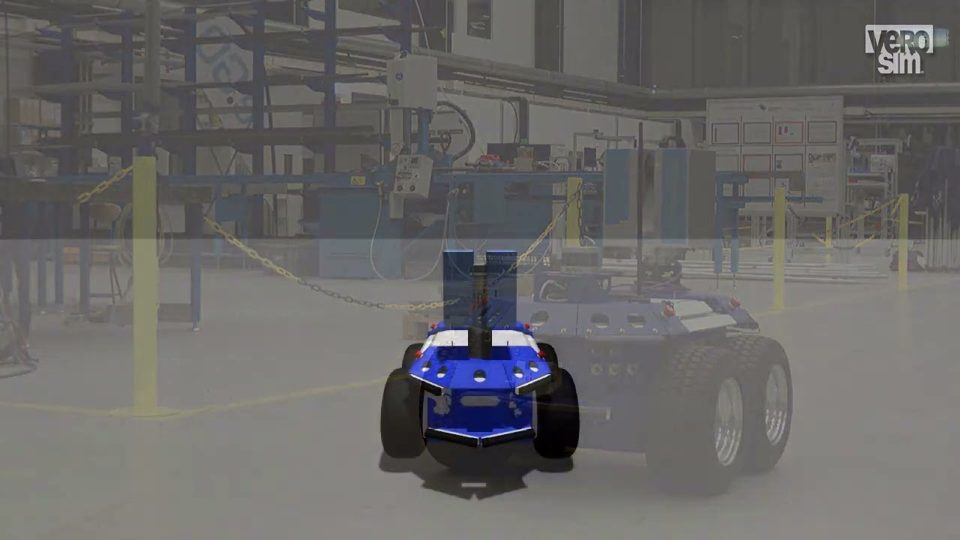 3:29
Fully automatic updating of BIM models
BIM (Building Information Modelling) models are widely used in industry, both for planning factory construction and for planning daily operations.
Auf YouTube ansehen 2:02
Backwards driving of vehicles with a trailer
Driving trailers backwards requires a sound introduction and training, especially when it comes to trailers with multiple steered axles which are common in narrow warehouses.
Auf YouTube ansehen 1:52
Dynamic real-time visualisation of big city models
City models and urban environments form the basis for many different areas of application. These range from visualisations in the field of architecture to construction and urban planning to traffic simulations.
Auf YouTube ansehen 1:18
Approach manoeuvre of an ATV to the ISS
The focus of this video is on the realistic simulation of suitable sensors for the development and optimisation of attitude control algorithms for space missions using the Automated Transfer Vehicle as an example.
Auf YouTube ansehen 1:35
Assistance systems in CFRP production
An increasingly important part of modern industrial production processes is the processing of carbon fibre reinforced plastics (CFRP).
Auf YouTube ansehen 4:06
Smart Forest Worker
This video presents the idea of a "Smart Forest Worker" developed by the Center of Excellence for Forestry 4.0 (Kompetenzzentrum Wald und Holz 4.0 (KWH4.0), https://www.kwh40.de/).
Auf YouTube ansehen 1:21
Simulation-based condition monitoring of real robots
The focus of this video is on predicting the energy efficiency of real robots through 3D simulation. The prediction is active, i.e.
Auf YouTube ansehen 1:16
Immersive simulation of driving dynamics
The VEROSIM simulation platform offers the possibility of realistic 3D simulation of vehicles including driving dynamics.
Auf YouTube ansehen 1:54
Sensor simulation for DAS/ADAS protection
Driver assistance systems (DAS) and advanced driver assistance systems (ADAS) are currently being tested and verified with the help of sensor recordings from test drives of many millions of kilometres.
Auf YouTube ansehen 1:40
Storm simulation in the Virtual Forest
In 2007, hurricane Kyrill passed over Europe and caused forest damage estimated at 1.5 billion euros in North Rhine-Westphalia alone.
Auf YouTube ansehen 7:43
Searching for Antimatter and Dark Matter in Space
It is international collaboration that makes such outstanding scientific projects possible, as Kay Bailey Hutchison, US Ambassador to NATO, pointed out in a keynote speech at RWTH Aachen University in May 2019.
Auf YouTube ansehen 0:38
Highway Simulation
The development of advanced driver assistance systems or automated driving functions often requires massive data for the testing and training of artificial intelligence, especially when it comes to neural networks.
Auf YouTube ansehen 1:03
Simulated Camera Monitoring System
The development of advanced driver assistance systems or automated driving functions often requires massive data for the testing and training of artificial intelligence, especially when it comes to neural networks.
Auf YouTube ansehen 3:01
Environment Generation
The development of advanced driver assistance systems or automated driving functions often requires massive data for the testing and training of artificial intelligence, especially when it comes to neural networks.
Auf YouTube ansehen 0:47
Simulated Rear View Fisheye Camera
The development of advanced driver assistance systems or automated driving functions often requires massive data for the testing and training of artificial intelligence, especially when it comes to neural networks.
Auf YouTube ansehen 5:57
INVIRTES: From Mission Ideas to Digital Twins - Collaborative Simulation-Based Systems Engineering
The paradigm of Model-Based Systems Engineering (MBSE) is a suitable approach to support the multi-disciplinary collaboration in development projects.
Auf YouTube ansehen 2:10
3D simulation-based assembly process development in ReconCell
The Horizon 2020 Innovative Action ”ReconCell” (http://www.reconcell.eu) develops a new type of robot workcell and according user interfaces for automated robot assembly at SMEs.
Auf YouTube ansehen 1:09
Sampling-based motion planning for the assembly simulation of micro-optical components in VEROSIM
The simulation system VEROSIM® supports various tools for the simulation-based commissioning of assembly processes for micro-optical components, e.g.
Auf YouTube ansehen 1:32
Visual Robot Programming with ActionBlocks
Especially in industrial production applications, process and product developers are faced with the task of programming a (partially) automated, robotic production system.
Auf YouTube ansehen 1:29
Simulation of a Motorcycle
Focussing on the construction of vehicles by means of locomotion, there are various possibilities to arrange their wheels.
Auf YouTube ansehen 3:06
A case-based simulation approach for wood harvesting operations
The established approaches to calculate wood harvesting costs are based on tables derived from experience and utilize diverse abstractions and simplifications to model harvesting operations.
Auf YouTube ansehen 1:16
Autonomous Harvester
The Video shows an automatted harvester control module. Sensor data is used to detect nearby trees and to localize the harvester.
Auf YouTube ansehen 1:15
3d simulation-based Virtual Commissioning
This video shows a simulated micro-optical assembly process on a Gantry cell by MA micro automation GmbH.
Auf YouTube ansehen 1:41
Legged Robot in the "Virtual Space Robotics Testbed"
The "Virtual Space Robotics Testbed" serves as a virtual development platform for robotic space missions.
Auf YouTube ansehen 0:50
Approaching Maneuver during Satellite Capture
Satellite capture using a free-flying space robot is a complex maneuver. According to the Newtonion law of actio and reactio, the manipulator motion induces a counter-motion of the base.
Auf YouTube ansehen 4:24
Localisation on other planets using VisualGPS
The video shows an example application of the virtual space robotics testbed based on the 3D simulation software VEROSIM®.
Auf YouTube ansehen 1:03
The Planetary Landing Mockup
In the video the simulation and realization of the "planetary landing mockup" in the research project "FastMap" is shown.
Auf YouTube ansehen 1:18
From Remote Sensing Towards Individual Trees
The single tree delineation shown in this video uses spectral and structural remote sensing data in order to generate a realistic model of huge forestry areas.
Auf YouTube ansehen 2:55
Sensor Simulation for Space Robotics Applications
This video shows an exploration robot on the surface of a distant planet. The focus is on the sensor simulation, which is the basis for the development and optimization of localization and navigation algorithms.
Auf YouTube ansehen 1:22
VisualGPS in the Forest
Developments in space robotics continue to find their way into our everyday lives.
Auf YouTube ansehen 1:26
Simulation of Construction Machines
Modern work machines, no matter if in the context of forestry or construction sites, are complex and thereby require e. g. extensive machine operator training to prevent cost-intensive damages.
Auf YouTube ansehenDie Videos liegen auf unserem YouTube-Kanal. Beim Öffnen eines Videos gelten die Datenschutzbestimmungen von YouTube. Zum Kanal